
MILLIA
At LUNIQ, we specialize in safe, effective, and scar-free cryotherapy treatments for a wide range of benign skin lesions.


Clinical Appearance
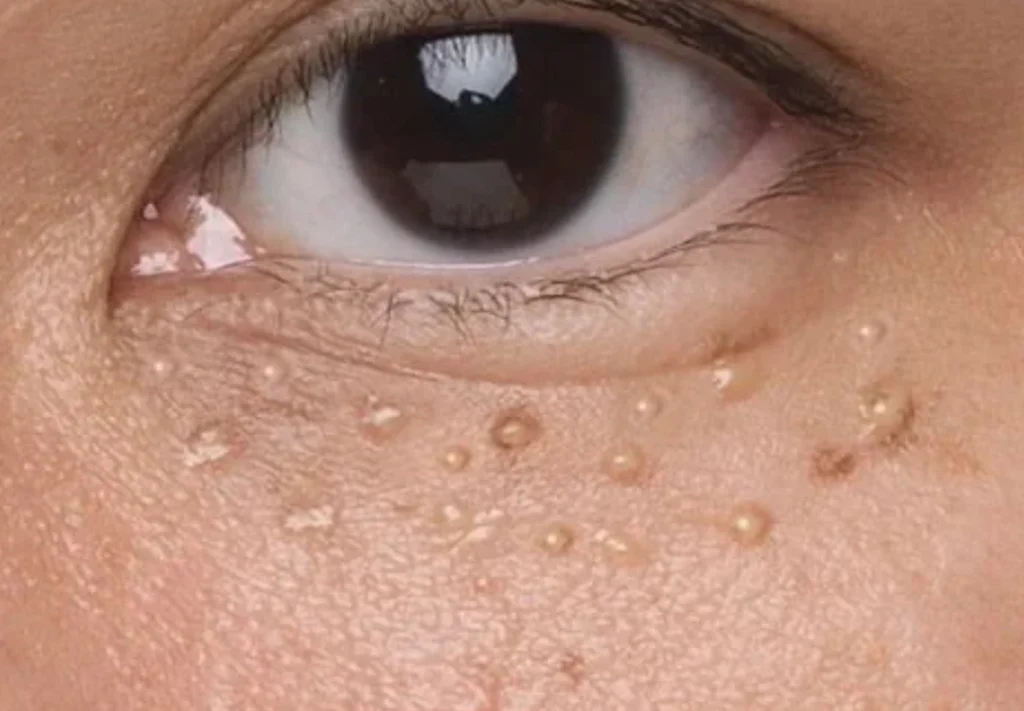
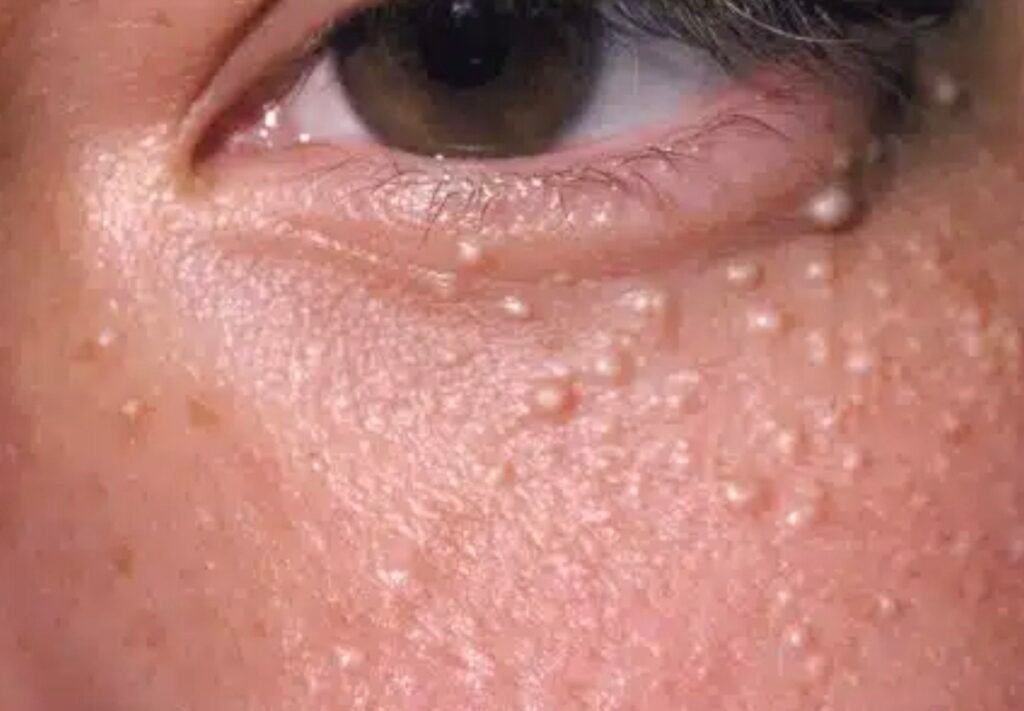
Milia are small, harmless cysts that look like firm white or yellow bumps on the skin. They are usually about 1–2 millimeters in size and most often appear on thin skin areas such as around the eyes, on the cheeks, or across the forehead. These tiny cysts are not pimples or infections; they are smooth, not red or painful, and do not contain pus. Under the microscope, a milium is a miniature sac just under the outer skin layer (the epidermis) that is filled with keratin, a natural protein our skin produces to protect its surface.
Preventions
To help prevent milia, it’s best to keep the skin healthy and well-exfoliated without over-scrubbing. Using light, non‑comedogenic (non‑pore‑blocking) skincare products allows the skin to breathe. Gentle chemical exfoliants, such as mild acids, can encourage normal shedding, while harsh scrubs or thick greasy creams may worsen the problem. Daily use of sunscreen helps prevent UV damage that can interfere with normal skin renewal.
Common Causes & Symptoms
Milia develop when keratin becomes trapped beneath the stratum corneum, the thin outer layer of the skin, instead of shedding normally. Normally, our skin cells go through a process called desquamation, where old surface cells fall away and are replaced by new ones. When this shedding process is disrupted; such as after skin trauma, burns, blistering, or even thick cosmetic creams; the keratin gets sealed under the skin and forms a tiny cyst called an epidermal inclusion cyst. Sun damage and aging can also contribute because they make the outer layer of skin thicker and slow natural cell turnover.
Why Cryotherapy Works
When treatment is needed, cryotherapy; a controlled freezing procedure is used to remove milia safely and effectively. During cryotherapy, a small amount of liquid nitrogen is applied directly to the cyst to freeze its thin wall. The rapid freezing forms ice crystals that break down the cyst’s cells, allowing the trapped keratin to be naturally reabsorbed by the body. Over the next several days, the treated area heals as the destroyed cyst wall flakes off or is absorbed, leaving the skin smooth again.
Because the skin around the eyes and face is delicate and sensitive, cryotherapy must be done very carefully. Too much freezing can cause hypopigmentation (light spots) or small surface damage. Therefore, the treatment should only be performed by a trained professional who can control the temperature and timing precisely. When done correctly, cryotherapy offers a quick, minimally invasive, and highly effective solution for stubborn milia, with little risk of scarring or recurrence.
Conditions We Treat
Skin Tags
Small, soft growths commonly found on the neck, underarms, or eyelids.
Moles
Benign pigmented skin growths that may require removal for cosmetic or medical reasons.
Warts
Rough, thick surface, irregular shape, and are often skin-colored or gray.
Fibromas
Firm, benign skin lumps typically found on the skin or under the skin.
Benefits of Treatment
Safety First
We prioritize your health and safety with every treatment.
Professional Care
Treatments performed exclusively by registered nurses trained in cryotherapy.
Modern Technology
We use the CryoProbe XP, the only medical device approved by Health Canada for skin lesion removal.
Patient Comfort
Our procedures are quick, painless, and require no downtime.
Transparency
Clear communication about treatments, pricing, and expected outcomes.
What to Expect During Your Treatment
- Your cryotherapy session at LUNIQ is straightforward and comfortable.
- After a brief consultation and skin assessment, our nurse will apply the CryoProbe XP to the lesion, delivering precise freezing temperatures.
- Most treatments last only a few minutes depending on the size and location of the lesion.
- There is typically no need for anesthesia, and most patients experience minimal discomfort.
- Post-treatment, the area may be red or slightly swollen, but this subsides quickly with no lasting marks.
Frequently Asked Questions
What is cryotherapy in aesthetics?
Cryotherapy in aesthetics is a treatment that uses controlled cold temperatures to target and eliminate unwanted skin concerns such as warts, skin tags, moles, age spots, or to refresh and tighten the skin. The cooling effect can also boost circulation and stimulate collagen production for a rejuvenated appearance.
Is cryotherapy safe?
Yes, when performed by a trained professional, cryotherapy is generally safe. The treatment is non-invasive, quick, and has minimal side effects, though some clients may experience temporary redness, tingling, or sensitivity in the treated area.
How long does a session take?
Most cryotherapy aesthetic sessions take between 5 to 15 minutes, depending on the size and number of areas being treated. It’s often referred to as a “lunchtime procedure” because of how quick and convenient it is.
Who should avoid cryotherapy?
Cryotherapy is not recommended for individuals who are pregnant, have uncontrolled high blood pressure, severe circulatory or heart conditions, cold sensitivity disorders (like Raynaud’s disease), or open wounds in the treatment area. A consultation is advised to ensure it’s the right option for you.
When will I see results?
Results can often be noticed immediately or within a few days, depending on the treatment type. For skin lesion removal (skin tags, moles, and warts), the treated area may darken, scab, and fall off naturally in 1–2 weeks. For rejuvenation purposes, improvements in skin tone and texture may be seen gradually over several sessions.
Where are you located?
We are located in Richmond Hill.
Ready to remove your skin lesions quickly and painlessly?
Request an appointment with LUNIQ is simple. Choose a time that works for you, and let our Registered Nurses take care of the rest. Most appointments take 30 minutes and include a consultation, assessment, and treatment (if eligible).